

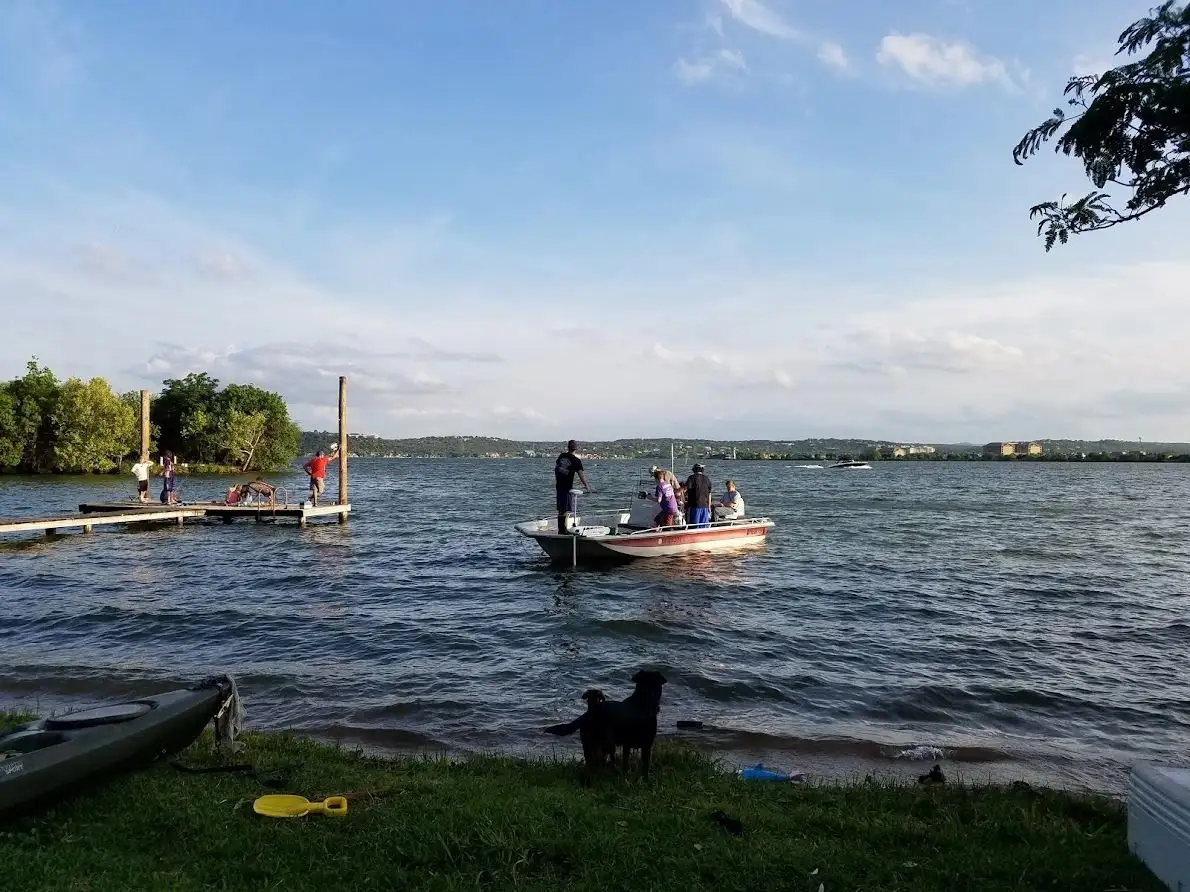

Buying a home on Lake LBJ is the easy part. The first year of owning it is when you learn everything nobody mentioned at closing. We've lived in the Highland Lakes since 2000, and this is the orientation we'd give any new neighbor.
Lake LBJ in a nutshell
Lake LBJ is a reservoir on the Colorado River in the Texas Hill Country, lying in Burnet and Llano counties about an hour northwest of Austin. It was created in the early 1950s with the completion of what is now Wirtz Dam, and was originally called Lake Granite Shoals. It was renamed in 1965 for President Lyndon B. Johnson, who had championed the dams of the Highland Lakes.
The lake covers roughly 6,500 acres and stretches about 21 miles, beginning at Kingsland, where the Llano River meets the Colorado, and running down to the dam near Horseshoe Bay.
Why "constant level" matters so much
The Highland Lakes are a chain of reservoirs managed by the Lower Colorado River Authority (LCRA). Two of them — Lake Buchanan and Lake Travis — are water-supply reservoirs, and their levels can swing dramatically between wet years and droughts.
Lake LBJ is different. It's a pass-through lake, held at a relatively constant level. For a waterfront owner that means your dock stays in the water, your shoreline stays where it is, and your view doesn't turn into a mudflat in a dry year. It's a big part of why waterfront property here is so sought after.
What constant level doesn't mean
It doesn't mean nothing ever changes.
- Floods still move through. When heavy rain falls upstream, LCRA passes that water through the chain of dams. Flows can rise quickly and carry debris. The Llano River flood of October 2018 was a dramatic reminder of how powerful that can be.
- LCRA sometimes lowers the lake on purpose. From time to time, LCRA schedules a drawdown of Lake LBJ — typically in the cooler months — so property owners can repair docks and retaining walls and clear debris. If you have waterfront work in mind, these windows are worth planning around.
Check LCRA's website for current lake conditions and any scheduled drawdowns.
Rules a waterfront owner should know about
We're not attorneys or engineers, and rules change, so always confirm the details with the agency involved. But new owners should be aware that:
- LCRA publishes safety standards for residential docks on the Highland Lakes. If you plan to build, replace, or substantially modify a dock, start there.
- Septic systems near the lakes are regulated, with LCRA administering on-site sewage rules around the Highland Lakes. If your home has a septic system, know where it is, what kind it is, and when it was last serviced.
- Your city or property owners' association may have its own rules on everything from exterior changes to landscaping standards. Horseshoe Bay, in particular, is known for well-kept community standards.
- Texas law requires boaters to drain water from their boats when leaving or approaching public fresh water, to slow the spread of invasive zebra mussels, which are present in the Highland Lakes.
The communities around the lake
Each part of the lake has its own personality:
- Horseshoe Bay — resort living on the south shore, with golf, a marina, and a large share of second homes.
- Kingsland — classic lake-house country at the confluence of the Llano and Colorado rivers.
- Granite Shoals — a residential lake city known for its waterfront parks, right next to Marble Falls.
- Sunrise Beach — quiet and tucked away on the far shore.
- Highland Haven — small, close-knit, and built around the water.
- Marble Falls — just downstream on Lake Marble Falls, and the commercial hub where you'll find the area's shops, restaurants, and service companies.
The seasonal rhythm of a Hill Country lake house
- Spring: Storm season. Hail, high winds, and heavy rain. Gutters, roofs, and docks all deserve a look after big weather.
- Summer: Heat. Your air conditioner, irrigation system, and pool equipment work their hardest exactly when you're using the house most. Filters matter.
- Fall: The best weather of the year, and the right time to handle maintenance projects before the holidays.
- Winter: Usually mild, occasionally brutal. See our winterization checklist for Hill Country lake houses.
Set up your local team early
The owners who get the most out of their lake house tend to have one thing in common: they don't try to manage it from two hundred miles away by themselves. They have someone local who walks the property regularly, knows the house, and can let a plumber in on a Tuesday.
You can assemble that yourself — a neighbor with a key, a lawn crew, a pool service, a housekeeper, a handyman — and coordinate them all by phone. Or you can have one point of contact who does it for you.
That second option is what we offer: weekly walk-throughs, maintenance handled start to finish, and a home that's ready when you arrive. We work only with privately used second homes — never rentals.
If you've just bought on Lake LBJ, welcome. Give us a call — we'd love to meet you.