

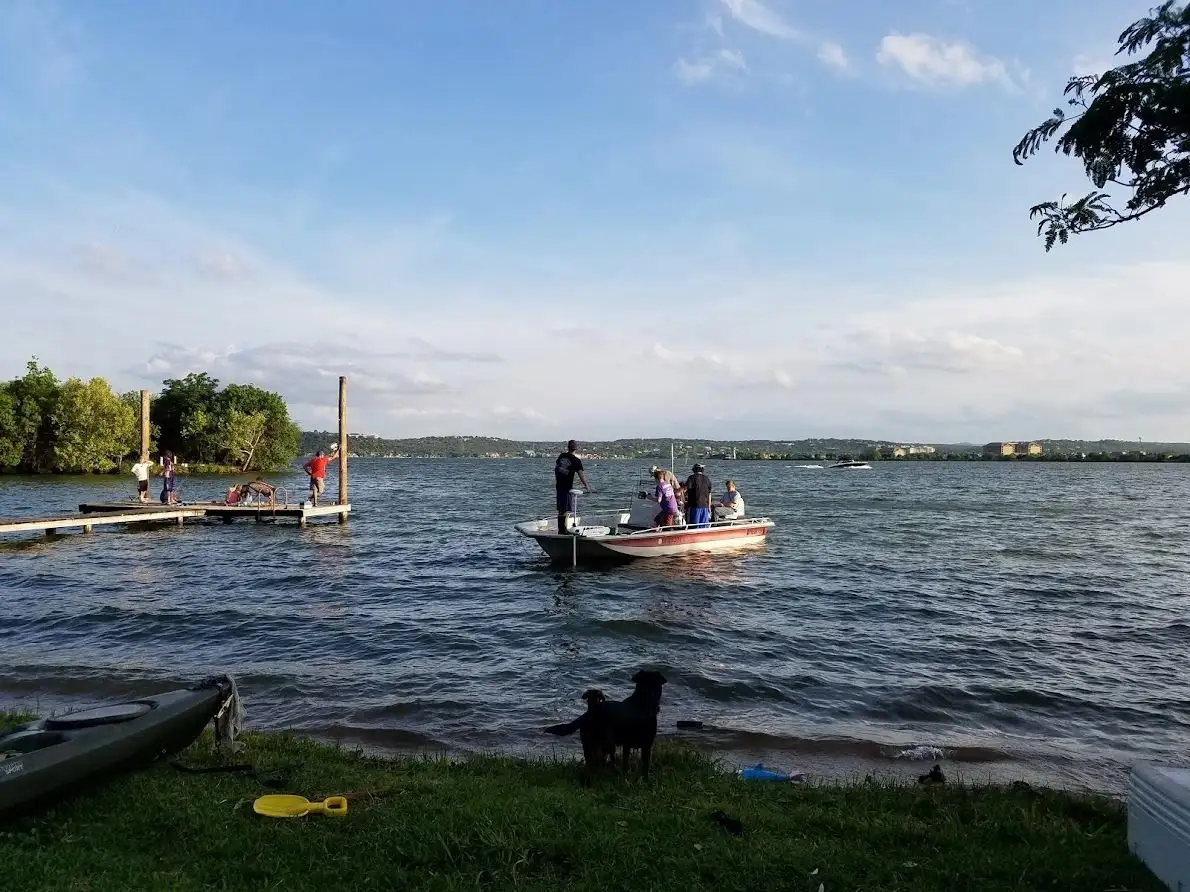

A lake house doesn't need anyone living in it to have a bad week. Systems run, weather happens, and small failures pile up — the only thing missing is someone to notice. After years of looking after second homes around Lake LBJ, these are the problems we watch for most closely, and why.
1. The slow leak
A failing toilet supply line, a weeping water-heater valve, a dishwasher connection that's worked loose. In a home you live in, you'd spot the puddle the same day. In a vacant house it can run for weeks — soaking subfloor, wicking up drywall, and ruining cabinets.
How to catch it early: Someone needs to physically go inside and look — under sinks, around toilets, at the water heater — on a regular schedule. That's why our weekly interior walk-through includes checking for leaks, flushing the toilets, and running the bathtubs.
2. The air conditioner that quit
Hill Country summers are relentless, and air conditioners in lake homes work hard. When one fails in a closed-up house in July or August, the indoor temperature and humidity climb quickly. Left long enough, that can mean musty smells, warped wood, and mold.
How to catch it early: Check regularly that the system is actually cooling, and change the filters on schedule. A clogged filter is one of the most common reasons systems struggle and fail.
3. The tripped breaker
A storm rolls through, the power flickers, and a breaker or GFCI outlet trips. Now the refrigerator or freezer in the garage is off. You find out three weeks later, the hard way.
How to catch it early: A walk-through that includes checking the kitchen appliances catches this within days rather than weeks.
4. The sprinkler system nobody's watching
A broken sprinkler head sends a geyser into the street at 5 a.m. every other day. Or a zone quietly stops working, and a section of lawn dies over a dry month. Either way, nobody's home to see it.
How to catch it early: Have the sprinkler system tested regularly, and have someone look at the yard every week who will notice a soggy patch or a brown one.
5. The septic or grinder pump alarm
Many homes around the lake rely on a septic system or a grinder pump, and those systems have alarms for a reason. But an alarm only helps if someone is there to hear it or see the light.
How to catch it early: Make the alarm part of a routine check. It's on our exterior checklist every week.
6. Uninvited guests
Closed-up houses are attractive to pests, and lake properties have their own cast — spiders and wasps around docks and eaves in particular. A small problem becomes an infestation when it has a quiet month to grow.
How to catch it early: Regular visits, regular pest control, and keeping an eye on systems like dock misters so they're actually working.
7. The dock and the boat
Your waterfront takes constant abuse from sun, wakes, and weather. After a storm or heavy rain upstream, a dock can shift or pick up debris. Meanwhile, a boat that sits for weeks is a boat with a battery that may not start.
How to catch it early: Have the dock looked at weekly and the watercraft checked before each visit, so the discovery doesn't happen with a cooler in your hand.
8. The house that looks empty
Overgrown beds, a lawn that hasn't been edged, packages on the porch, leaves piled at the door. A home that obviously sits empty draws the wrong kind of attention.
How to catch it early: Keep the property looking lived-in, confirm the alarm system is working, and have someone verify every door and window is locked on every visit.
The common thread
Look back over that list and you'll notice that nearly every item is a small problem. None of them is a catastrophe on day one. Each becomes expensive only because of time — the days and weeks it goes unnoticed.
That's why the most valuable thing you can do for a second home isn't any one gadget or upgrade. It's making sure a capable person is walking through it on a regular schedule, and that there's a clear process for handling whatever they find.
That's our entire job. If you'd like that for your home on Lake LBJ, get in touch.